
Welcome to Venus Class
2026 – 2027
Welcome to what will be a FABULOUS and very BUSY year!
We (Mrs Jenkins, Mrs Board, Mrs White and Mrs Harney) have lots of exciting learning opportunities planned for the year ahead and we hope you are looking forward to the responsibilities and challenges of Year 6.
It is very important that you come with a positive attitude and a growth mindset.
Always remember: hard work = success!
Geography – Mapping the Earth
How can globes, maps and digital mapping help us to navigate and understand our world?
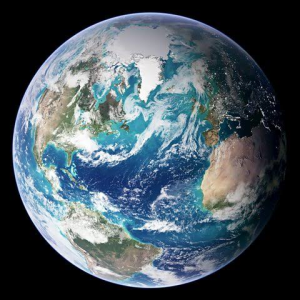 During this project, children will revise Earth’s features and lines of latitude and longitude, then learn about map scales, grid references, contour lines and map symbols. They will then study human settlement patterns and carry out an enquiry into local settlements.
History -Hope, Heroes and Home Front
What was the Second World War like for people in Britain?
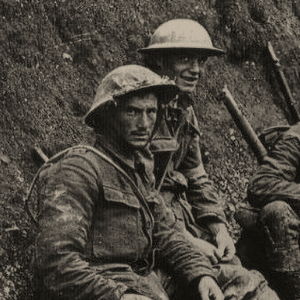
In this project, children will explore the key causes of the Second World War and its impact on people in Britain. They will learn about evacuation, the Battle of Britain, the Blitz, and everyday life on the home front, using evidence and stories. They will also explore wartime jobs, propaganda posters and the events leading to Victory in Europe Day. Throughout the project, children will consider how people experienced the war in different ways and how they supported one another during difficult times.
We will be focusing on our Christian values of hope, courage and Koinonia through this topic as we look at the lives of those involved in the wars – those who fought and those who stayed behind.

Science
The Journey of Blood
How does blood travel around the body?
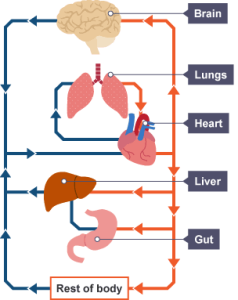
During this project, children learn about the role of the circulatory system and its main parts, carrying out research to answer their own questions. They look closely at the heart’s structure, functions and features; explore blood by preparing a representation of a separated sample; learn how each blood vessel works; and discover how diet, exercise and drugs affect the body.
Evolving Earth
During this project, children learn what fossils are, revisit how they form and explore how the fossil record helps us understand living things. They discuss evolution and the work of Charles Darwin and Alfred Russell Wallace, learning that life on Earth is related and has changed over time. Children learn about inheritance, variation, adaptation, natural selection and survival of the fittest, before investigating plant and animal adaptations and creating a museum exhibit to show how a species has adapted to survive.
Art – Winged Wonders

How can we use insects as inspiration for artwork?
During this project children learn why insects are a rich source of inspiration for artists. They develop observational drawing skills and explore how materials, colour and techniques can be combined to create insect inspired artwork. Children experiment with mixed media and Pop Art approaches before bringing their learning together to create, refine and explain a final piece of insect art.
Design Technology – Repair and Reuse
How can we repair and reuse textiles creatively?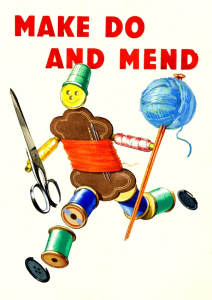
During this project children learn about the importance of reusing and repurposing clothing to reduce waste and protect the environment. They investigate how garments can be deconstructed, repaired and transformed, learning a range of techniques to join, repair and embellish fabric. Children apply these skills to plan, make, refine and evaluate a wearable item, giving an old piece of clothing a new purpose.
Religious Education
Islam

How does tawhid create a sense of belonging to the Muslim community?
Christianity
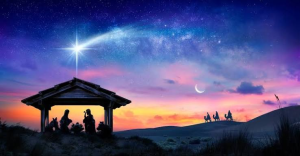
How do Christians show their belief that Jesus is God incarnate?
Music
- Developing ensemble skills through the question: ‘How does music connect us with our past?
- Creative composition through the question: ‘How does music improve our world?’
Computing
Computing systems and networks – systems and searching.
In this unit, children develop their understanding of computer systems and how information is transferred between systems and devices. Learners consider small-scale systems as well as large-scale systems. They explain the input, output, and process aspects of a variety of different real-world systems and discover how information is found on the World Wide Web, through learning how search engines work (including how they select and rank results) and what influences searching, and through comparing different search engines.
Creating media – video production
This unit gives learners the opportunity to learn how to create short videos in groups. As they progress through this unit, they will be exposed to topic-based language and develop the skills of capturing, editing, and manipulating video.
French – A l’ecole/At school
Children will learn the nouns and determiners/definite articles for 10 school subjects. They will also learn how to conjugate the verb ‘to study’, an introduction to time and an expansion of opinions. By the end of the unit pupils will have the knowledge and the skills to talk about the subjects they like and dislike at school and at what time and which day they study various subjects.
PSHE
- Me and my relationships – Children will explore the skills needed for successful friendships and teamwork. They’ll also be thinking about people who are special to them and who they can turn to for help, when needed.
- Valuing differences – Children will be celebrating our differences by exploring what we have in common with others, what makes us different, and the positive things about this. We’re also thinking about the positive difference that respect and kindness – both face-to-face and online – can make to every one of us.
PE
PE will be on a Wednesday and a Friday this term. Please make sure that your child has appropriate PE clothing, especially footwear. As the weather gets colder and wetter the children will need to be dressed accordingly as we will be outside unless the weather is really bad. Children must have football boots when their lesson takes place on the field during the Autumn and Spring terms.
Autumn Term – Netball and Rugby
Maths
Following the White Rose Maths scheme, this term we will focus on:
- place value, calculation strategies, fractions and measure
- weekly arithmetic practice
Keep practising your times tables as they are SO important!
English
Writing – Using the ‘Write Stuff’ we will sentence stack and produce our independent writes. We will produce a short report based on our pet peeves to get us back into the writing process. From there we will produce a letter as an evacuee child inspired by the book ‘Letters from the Lighthouse’ and then a short narrative based on Michael Morpurgo’s ‘Kensuke’s Kingdom.’
Spelling – Spelling includes daily and weekly spelling activities that are built on the fundamentals of teaching spelling with strong phonetic foundations. We also use Emile spelling which is a comprehensive, progressive and detailed scheme for teaching and learning spelling effectively. https://emile-education.com/

Reading – we will read everyday. This could be whole class reading, independent reading, reading comprehension and/or reading within other subjects.
We will read a range of texts from our Year 6 reading spine including:


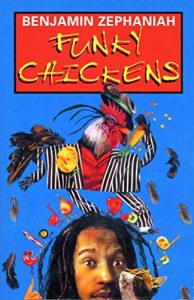
Everyone must have a reading book in school with them everyday. The book corner in class is full of exciting and varied texts for you to borrow and enjoy.
Exciting books to take a look at for our project:
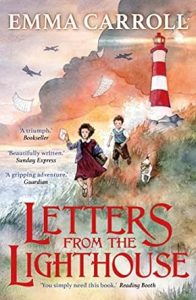

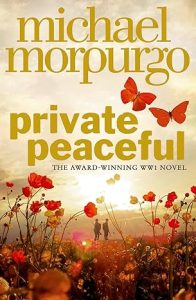
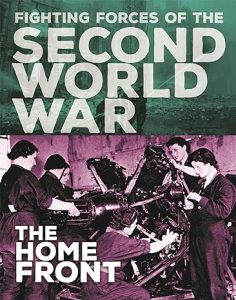

Take a look at this website for some amazing Year 6 reading books.
https://www.booksfortopics.com/year-6
Please remember to keep up to date with us on Class Dojo and message us here if you have any questions or concerns. Please keep in touch!
