Welcome to the Jupiter Class page
The teaching team in Year 1 this year is Mr Easby (Class Teacher) & Mrs Cheshire (Teaching Assistant). Mrs Harney will teach the class on Wednesday mornings.
Autumn Term 2026
Legacy Figure
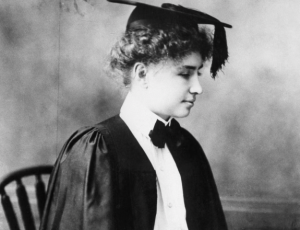
For this project our legacy figure will be Helen Keller.



English
The Write Stuff
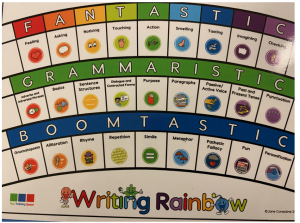
We will continue to use ‘The Write Stuff’ strategies to teach writing across the term.
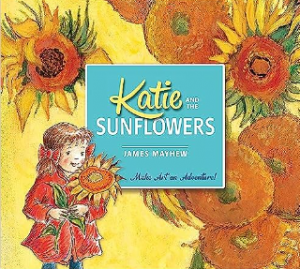
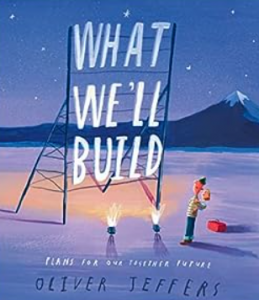
Units: Pigs Might Fly, What we’ll build, Katie and the sunflowers, The Way Back Home

Maths
White Rose Maths
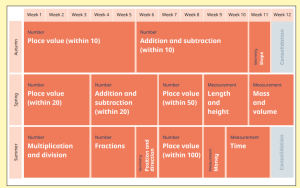
Autumn Term: Place Value (to 10), Addition & Subtraction (to 10) & Geometry (Shape)
Download free home workbooks produced by White Rose Maths. This is the maths scheme that we use so these booklets will fit the children’s learning in school (Autumn blocks 1 – 3). The second link is to teaching videos linked to each lesson.
https://whiteroseeducation.com/parent-pupil-resources/maths/free-downloads
https://whiteroseeducation.com/parent-pupil-resources/maths/home-learning?year=year-1-new
Science
Marvellous Materials

During this project, children learn that objects are made from a range of different materials, each with its own characteristics. They identify a variety of everyday materials and explore where these materials come from. Through simple investigations, children examine the properties of materials and begin to recognise that these properties determine how materials can be used. By observing, comparing and discussing their findings, they develop a clearer understanding of why certain materials are chosen for particular purposes.
Seeing, Smelling, Tasting

During this project, children learn that humans are a type of animal known as a mammal. They name and count body parts and identify similarities and differences. They learn about the senses, the body parts associated with each sense and their role in keeping us safe.
History
Helen Keller: A Life Without Limits
During this project, children will learn the story of Helen Keller and explore how she learned to communicate. They will also learn about the story of her good friend, Alexander Graham Bell, whose inventions and ideas helped Helen communicate, before understanding how Helen became an important campaigner for people’s rights. They will then learn more about Louis Braille, the inventor of the reading and writing system that was so important to Helen, before using Braille to make their classroom more accessible for visually impaired people. The children will finally learn about Helen’s influence on the world and how other people have been inspired by her life.
Geography
Local Explorers: What features can we find in our local area?
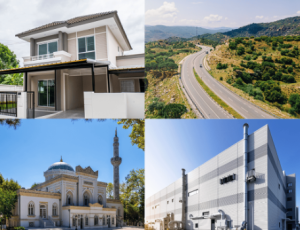
During this project, children will learn what geography is and how it helps us understand the world around us. They will begin by identifying physical and human features and exploring simple maps, including one with a key. They will then use positional and directional language, including the cardinal compass points, to describe locations, give directions and follow routes. Finally, they will investigate local human and physical features through simple fieldwork, using their observations and data to build a clearer picture of their environment.
Music

Rhyming in Time
This unit focuses on rhythm, movement, and vocal exploration through the song “Feel The Beat”. Children develop their understanding of time and tempo by moving in sync with the music, chanting, and using a variety of voices to perform. The fun and interactive activities will allow children to explore different speeds of music while building confidence in following cues. By the end of this unit, children will be comfortable moving, singing, and rapping in time to the beat, using their voices creatively and developing a sense of musical structure.
PSHE (Personal, Social and Health Education)
Autumn 1 – Me and My Relationships
Autumn 2 – Valuing Difference
RE

Autumn 1 – Christianity, Baptism Why is belonging to God and the church family important to Christians?
Autumn 2 – Judaism, Belonging Why is learning to do good deeds so important to Jewish people?
Computing
Technology Around Us

Children will develop their understanding of technology and how it can help them in their everyday lives. They will start to become familiar with the different components of a computer by developing their keyboard and mouse skills. They will also consider how to use technology responsibly and who to ask for help if they see any content or comments online that make them feel uncomfortable.
Art & Design
Colour Creators
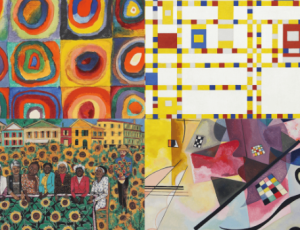
During this project, children will learn about basic colour theory by studying the colour wheel and colour mixing. They explore primary and secondary colours and how artists use colour in their artwork.
Design & Technology
Outdoor Curriculum – Our focus this term will be knotting and weaving using the outside area.
PE
Autumn 1 – Fundamentals & Ball Skills
Autumn 2 – Gymnastics & Yoga
Books for topics

Books for topics is a great website that recommends age appropriate books for children related to various topics.
https://www.booksfortopics.com/year-1

Reading

Reading books will be changed on a Tuesday and Thursday. It is expected that children are reading at home to an adult every night (this might only be a few pages or a whole book depending on your child’s reading ability), this means that there will be times when they re-read a book, which is very much expected and encouraged and this is a good opportunity to check their comprehension of the text (most of the books have question ideas in the back), or to work on their reading fluency and expression. Please indicate in their reading diary when the book is finished so that we know to change their book on the book change days. Please also make sure that their book is in school everyday as there are opportunities to read this book in the school day.

Class Dojo

Don’t forget to check ClassDojo for class updates.
Other Year 1 Information
Snacks – please supply a small snack as the children eat it prior to breaktime (10.30am), the school supplies a healthy snack for the afternoon break (2pm).
PE days Tuesday & Thursday